- Teacher: Admin User
2025hm164661.gnomio.com
-
Welcome to your new Gnomio site
Now, you are in control!
Moodle is an open-source Learning Management System (LMS) that provides educators with the tools and features to create and manage online courses. It allows educators to organize course materials, create quizzes and assignments, host discussion forums, and track student progress. Moodle is highly flexible and can be customized to meet the specific needs of different institutions and learning environments.
Moodle supports both synchronous and asynchronous learning environments, enabling educators to host live webinars, video conferences, and chat sessions, as well as providing a variety of tools that support self-paced learning, including videos, interactive quizzes, and discussion forums. The platform also integrates with other tools and systems, such as Google Apps and plagiarism detection software, to provide a seamless learning experience.
Moodle is widely used in educational institutions, including universities, K-12 schools, and corporate training programs. It is well-suited to online and blended learning environments and distance education programs. Additionally, Moodle's accessibility features make it a popular choice for learners with disabilities, ensuring that courses are inclusive and accessible to all learners.
The Moodle community is an active group of users, developers, and educators who contribute to the platform's development and improvement. The community provides support, resources, and documentation for users, as well as a forum for sharing ideas and best practices. Moodle releases regular updates and improvements, ensuring that the platform remains up-to-date with the latest technologies and best practices.
Links of interest:
(You can edit or remove this text)
Available courses
- Teacher: Admin User
Introduction
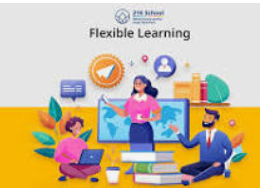
Flexible and blended learning are modern approaches to education that combine traditional face-to-face teaching with digital and online learning. These approaches aim to provide personalized, learner-centered experiences that accommodate different learning styles, schedules, and locations.
In essence, flexible learning emphasizes choice and adaptability, while blended learning emphasizes a mix of online and in-person instruction.
2. Definitions
Flexible Learning
-
An educational approach that adapts to the needs of learners.
-
Learners can choose:
-
When they learn (time flexibility)
-
Where they learn (location flexibility)
-
How they learn (method and pace flexibility)
-
Example: Online courses with optional face-to-face workshops, self-paced modules, and multiple assessment options.
Blended Learning
-
Combines traditional classroom instruction with online learning components.
-
Typically structured so that part of the course is delivered face-to-face and part is delivered online.
Example: A course where lectures are given in class, but assignments, quizzes, and discussions are conducted on a learning management system (LMS) like Moodle or Google Classroom.
3. Characteristics of Flexible Learning
-
Learner-centered: Focuses on individual needs and preferences.
-
Multiple delivery methods: Can include online platforms, face-to-face sessions, or a hybrid of both.
-
Pace flexibility: Learners progress at their own speed.
-
Access to resources: Learners can access learning materials anytime, anywhere.
-
Choice in assessment: Learners may choose how to demonstrate their understanding.
4. Characteristics of Blended Learning
-
Integration of online and in-person activities
-
Use of technology for learning and collaboration
-
Structured schedule for both face-to-face and online components
-
Continuous assessment and feedback
-
Encourages independent learning alongside guided instruction
5. Models of Blended Learning
-
Flipped Classroom – Students study content online before class, then use class time for discussion and activities.
-
Rotation Model – Students rotate between online learning and face-to-face instruction.
-
Enriched Virtual Model – Most learning occurs online, with occasional face-to-face sessions.
-
Flex Model – Online learning is the primary mode, with teachers providing support as needed.
6. Advantages of Flexible and Blended Learning
-
Accessibility: Learning is available anytime, anywhere.
-
Personalization: Learners can follow content that suits their pace and style.
-
Engagement: Use of multimedia and interactive tools increases learner motivation.
-
Skill Development: Enhances digital literacy, self-regulation, and critical thinking.
-
Cost-Effectiveness: Reduces the need for physical infrastructure in some cases.
7. Challenges of Flexible and Blended Learning
-
Digital divide: Not all learners have access to reliable internet or devices.
-
Self-discipline: Learners need motivation and time-management skills.
-
Teacher training: Educators require skills to design and manage blended courses.
-
Quality assurance: Ensuring learning outcomes are consistent across different delivery modes.
-
Technical issues: Platforms and software may have glitches or usability problems.
8. Tools and Technologies Used
-
Learning Management Systems (LMS): Moodle, Google Classroom, Canvas
-
Video Conferencing: Zoom, Microsoft Teams, Google Meet
-
Digital Content Creation: Canva, Prezi, Powtoon
- Teacher: Odel Trainer
- Teacher: Admin User
Course Code: PSY 101 (or equivalent)
Credit Hours: 3 Units
Course Duration: 14–16 Weeks
Delivery Mode: Face-to-Face / Blended / Online
Course Description
This course provides an overview of the scientific study of behavior and mental processes. It introduces students to the major theories, principles, methods, and applications of psychology as a discipline. The course covers biological, cognitive, developmental, social, and personality perspectives of human behavior. Emphasis is placed on understanding how psychological concepts apply to everyday life, education, health, and work settings.
Course Objectives
By the end of this course, students should be able to:
-
Define psychology and explain its goals, scope, and methods.
-
Describe the major historical and contemporary approaches in psychology.
-
Apply psychological concepts to understand behavior and mental processes.
-
Analyze the biological, cognitive, social, and cultural influences on behavior.
-
Demonstrate an understanding of psychological research methods and ethics.
-
Develop self-awareness and critical thinking skills through psychological reflection.
Course Learning Outcomes
After completing the course, learners will be able to:
-
Explain major psychological theories and their proponents.
-
Identify and describe key processes underlying perception, learning, memory, and emotion.
-
Discuss human development across the lifespan.
-
Apply psychological principles in problem-solving, relationships, and personal growth.
-
Evaluate the role of culture and society in shaping human behavior.
Course Outline (Weekly or Modular Breakdown)
| Week / Module | Topics | Key Concepts / Activities |
|---|---|---|
| 1. Introduction to Psychology | Definition, goals, and branches of psychology; relevance of psychology in everyday life | Activity: Self-assessment of interests in psychology |
| 2. History and Schools of Thought | Structuralism, Functionalism, Behaviorism, Psychoanalysis, Humanism, Cognitive Psychology, Gestalt | Discussion: Compare early schools of thought |
| 3. Research Methods in Psychology | Scientific method, experiments, surveys, case studies, ethics in research | Activity: Design a simple psychological study |
| 4. Biological Bases of Behavior | Neurons, brain structure, nervous system, hormones, genetics | Lab/Video: Brain structure and function |
| 5. Sensation and Perception | Sensory processes, thresholds, visual and auditory perception | Activity: Illusions and perception tests |
| 6. Consciousness | Sleep and dreams, hypnosis, psychoactive drugs, circadian rhythms | Reflection: Sleep journal |
| 7. Learning | Classical and operant conditioning, observational learning | Activity: Conditioning demonstration |
| 8. Memory | Memory processes (encoding, storage, retrieval), forgetting, improving memory | Mini-project: Memory experiments |
| 9. Cognition and Intelligence | Thinking, problem-solving, creativity, intelligence theories and testing | Debate: Nature vs. Nurture in intelligence |
| 10. Motivation and Emotion | Theories of motivation, intrinsic vs. extrinsic motivation, basic emotions | Case study: Motivation in education or work |
| 11. Human Development | Lifespan development – prenatal to adulthood, cognitive and moral development | Group activity: Life stages timeline |
| 12. Personality | Major theories (Freud, Jung, Rogers, Trait Theories), personality assessment | Activity: Personality test and interpretation |
| 13. Psychological Disorders | Classification (DSM-5), anxiety, mood, personality, and psychotic disorders | Video/Case analysis: Understanding mental illness |
| 14. Therapies and Treatment | Psychotherapy, behavioral and cognitive therapies, biomedical treatments | Role-play: Counseling scenarios |
| 15. Social Psychology | Attitudes, conformity, prejudice, attraction, group behavior | Activity: Social experiment reflection |
| 16. Positive Psychology and Review | Stress, coping, happiness, well-being, resilience | Reflection paper: “Psychology and Me” |
Assessment Methods
| Component | Description | Weight (%) |
|---|---|---|
| Class Participation | Attendance, discussions, activities | 10% |
| Quizzes | Weekly or biweekly tests | 15% |
| Midterm Exam | Covers first half of course | 20% |
| Research/Reflection Paper | Application of psychological concept to real life | 15% |
| Group Project / Presentation | Topic-based collaborative project | 15% |
| Final Exam | Comprehensive assessment | 25% |
Teaching and Learning Strategies
-
Lectures and discussions
-
Multimedia presentations
-
Collaborative group work
-
Case studies and role-playing
-
Online learning activities (if blended)
-
Self-assessment and reflection journals
- Teacher: Odel Trainer
- Teacher: Admin User